Water Intake Calculator
Enter your weight, exercise time and weather to get a daily estimate. It includes the water you get from food and drinks, including coffee and tea.

Water Intake Calculator
(155 lb)
Your estimated daily water needs
2.65 L
(89.6 US fl oz)
About 10.5 (250 mL (8.5 fl oz) per glass)
- By body weight
- 2,300 mL(77.8 fl oz)
- Exercise
- 350 mL(11.8 fl oz)
- Heat
- 0 mL(0.0 fl oz)
We use 33 mL per kg of body weight, add 350 mL per 30 minutes of exercise and add 500 mL in warm weather or 1,000 mL in hot weather. How we calculate this
Use this number as a starting point. You don’t need to hit this number. Drink when you’re thirsty, avoid large amounts at once and follow any medical advice you’ve received about fluids. Read about water intoxication
For healthy adults. If you’re pregnant or breastfeeding, have a fluid restriction or have kidney, heart or liver disease, ask your clinician how much to drink.
Track your drinks with DropWise
Log what you drink and set reminders on iPhone and Apple Watch.

Free to download. Optional Premium features.
How much water do you get from food and drinks?
Add what you drink to see how much of your daily estimate is left for plain water.
From the water calculator
(89.6 US fl oz)
Coffee
Brewed coffee, espresso, americano
Servings
Total: 480 mL(16.2 fl oz)
Tea
Black, green or herbal tea
Servings
Total: 480 mL(16.2 fl oz)
Other drinks
Milk, sparkling water, broth or other non-alcoholic drinks
Servings
Total: 250 mL(8.5 fl oz)
Food provides about a fifth of total water in a typical diet. You may get more if you eat a lot of fruit, vegetables or soup.
Estimated amount left for plain water
0.91 L
(30.8 US fl oz)
About 3.5 (250 mL (8.5 fl oz) per glass)
We subtract the drinks you entered and the estimated water from food from your daily total.
Where your water comes from
- Remaining water (estimated)910 mL (30.8 fl oz)34%
- Coffee480 mL (16.2 fl oz)18%
- Tea480 mL (16.2 fl oz)18%
- Other drinks250 mL (8.5 fl oz)10%
- Water in food (estimated)530 mL (17.9 fl oz)20%
What this calculation includes
- We count the full volume of each drink. In a four-hour study (Maughan et al., 2016), coffee and tea produced about the same urine output as water. Milk and oral rehydration solution stayed in the body a little longer. The study doesn’t tell us what share of each drink to count over an entire day.
- The percentage you select for food is an estimate.
- We leave out alcoholic drinks because alcohol can increase urine output.
- DropWise may give a different total. The app counts coffee at 80% of its volume and black tea at 90%, for example. Those are estimates the app uses, separate from the Beverage Hydration Index.
Track water, coffee, tea and other drinks with DropWise.
Free to download. Optional Premium features.
Urine Color Guide
Choose the shade closest to the color of your urine.
Select a shade
Selected shade
Pale yellow · Hydrated
A common sign of good hydration. Keep drinking to thirst through the day.
Urine color can give you a clue about hydration. Food, supplements, medications and health conditions can also change the color.
When to get medical advice
- Red, pink, brown or cola-colored urine that is not explained by something you ate (such as beets) or a medication
- Dark urine together with pale stools or yellowing of the skin or eyes
- Pain or burning when urinating, fever, or cloudy, strong-smelling urine
- Passing very little or no urine for many hours, especially with dizziness, confusion or extreme thirst
Contact a doctor promptly if you notice any of these. If someone is confused, very drowsy or collapses, call your local emergency number.
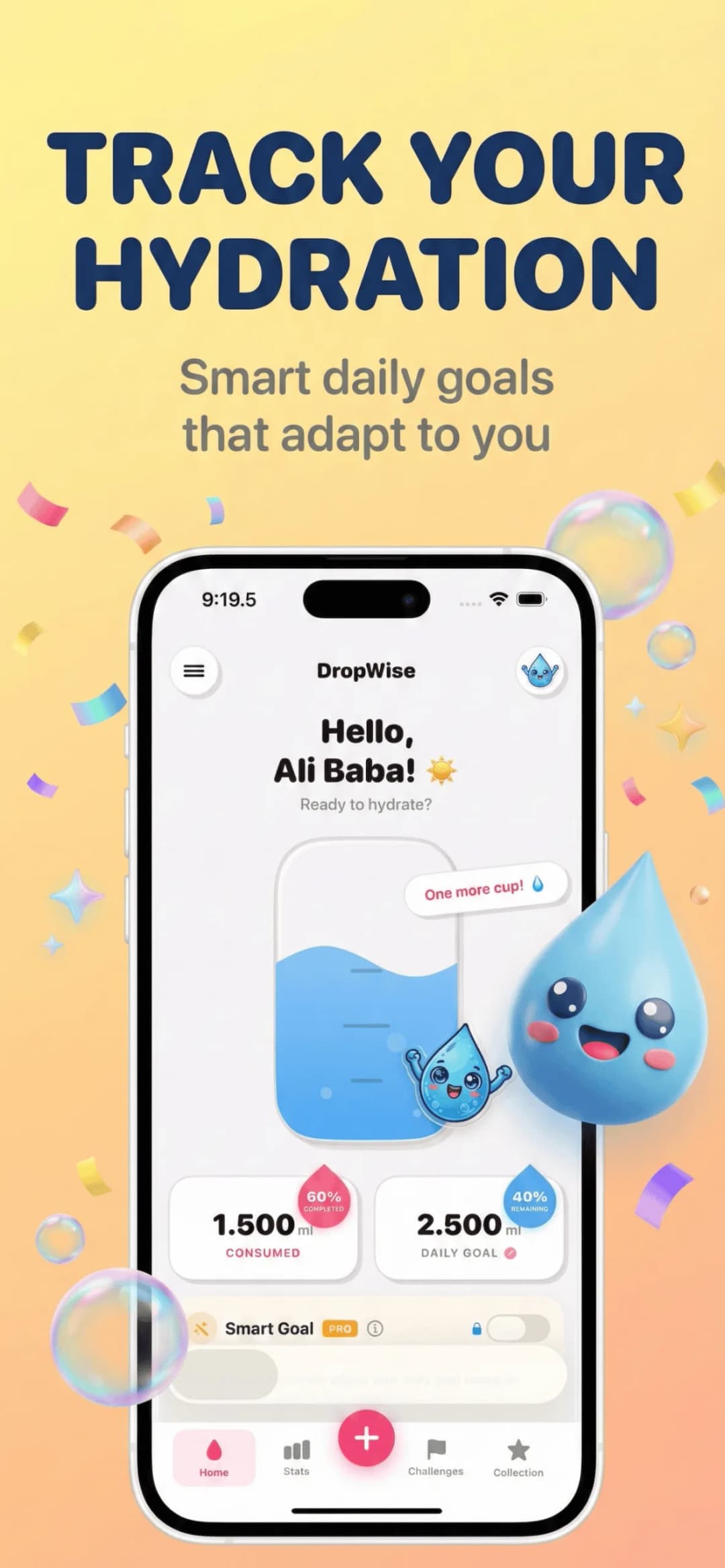
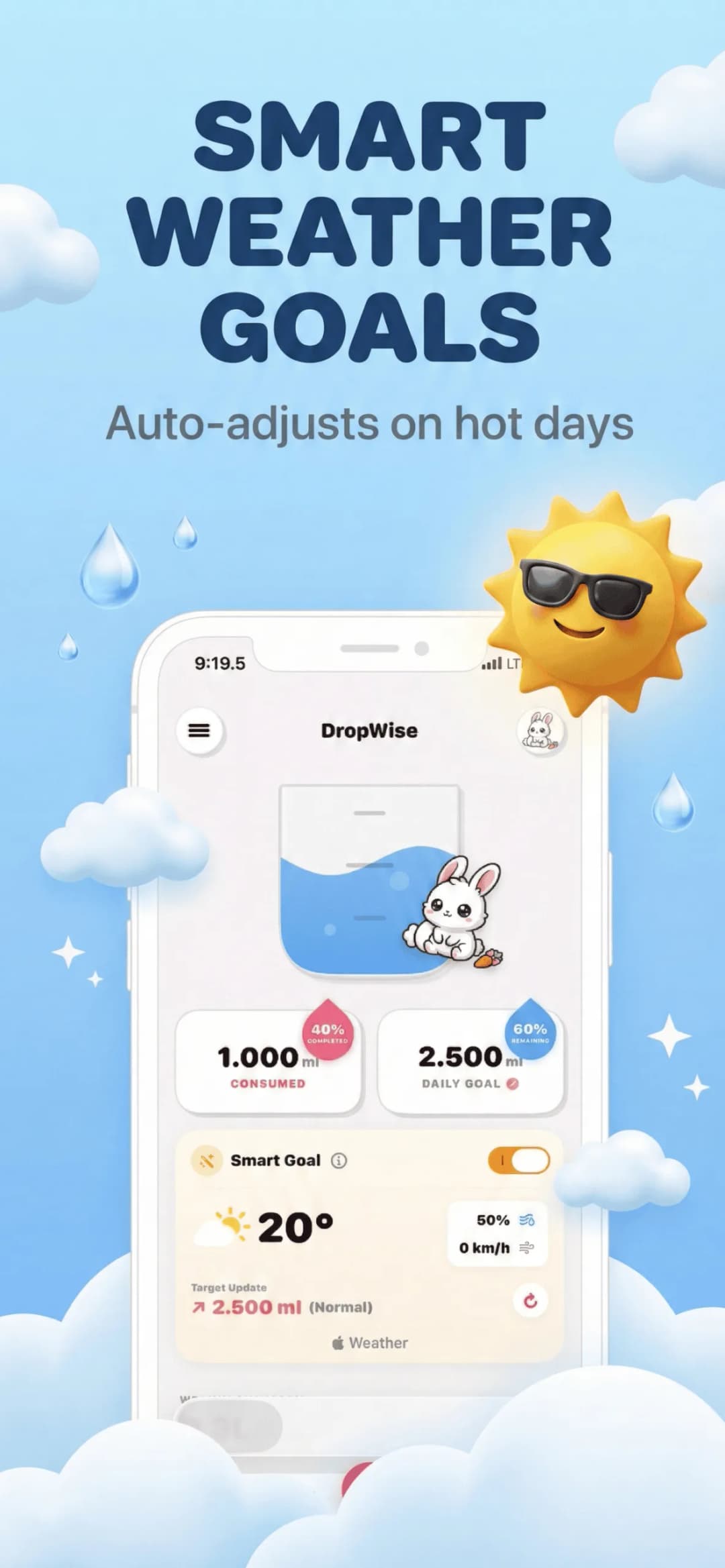
Water reminders on iPhone and Apple Watch
Use DropWise to log your drinks and set reminders that fit your day.
- 40+ drinksLog water, coffee, tea, milk and more in a tap.
- Apple WatchLog drinks and check your progress from your watch.
- Reminders on your scheduleChoose how often to get reminders and when to pause them.
- Widgets & Live ActivitiesSee your progress on the Home Screen, Lock Screen and Dynamic Island.
- Apple HealthSave your water intake to the Health app.
- Weather-aware goalsWith Premium, you can let the app adjust your goal based on local weather.
Free to download. Optional Premium features.
How we estimate your water needs
We start with your weight, then add an allowance for exercise and hot weather. The result is a rough estimate for healthy adults. No health agency publishes this formula.
Base estimate: 33 mL per kg (about 0.5 US fl oz per lb)
We start with 33 mL for each kilogram of body weight. At 70 kg (154 lb), that’s about 2.3 L (78 US fl oz). The reference values below are set per person. Using weight is a shortcut this calculator takes.
DropWise starts at 30 mL per kg, with a minimum of 1.5 L and a maximum of 4 L. That’s why its starting goal may differ from this page.
Exercise adjustment: +350 mL per 30 minutes
The calculator adds 350 mL (about 12 US fl oz) per 30 minutes of exercise. How much you actually lose in sweat can vary a lot. The American College of Sports Medicine recommends tailoring your plan to your own sweat loss.
Weighing yourself before and after a typical session can help you estimate sweat loss if you also account for what you drink. Drinking more than you lose increases the risk of hyponatremia.
Weather adjustment: +500 mL warm, +1,000 mL hot
We chose these amounts as rough estimates. How much extra water you lose depends on temperature, humidity, sun, clothing and how active you are.
How we round the result
We round each part to the nearest 50 mL before adding them up. The calculator uses US fluid ounces.
Total water vs. plain drinking water
The result includes water from everything you eat and drink. Food accounts for roughly a fifth of the total in a typical diet. You can change that percentage in the drink calculator above.
Who this is for
The calculator is general information for healthy adults. It is not suitable for children, and it should not replace individual advice if you have a prescribed fluid restriction, kidney, heart or liver disease, take medicines that affect fluid balance, or are pregnant or breastfeeding.
Endurance athletes who need precise fluid and sodium plans should work with a sports medicine professional.
How much water do adults need per day?
European and US reference values for adults range from 2.0 to 3.7 liters a day. They include water from food and all drinks. Your own needs may differ.
The European Food Safety Authority (EFSA) gives reference values of 2.0 liters for women and 2.5 liters for men. The US National Academies give higher figures: 2.7 liters (91 US fl oz) and 3.7 liters (125 US fl oz).
These numbers describe groups of people. For most healthy adults, drinking with meals and when thirsty is a useful way to stay hydrated.
| Source | Women | Men | What counts |
|---|---|---|---|
| EFSA (Europe, 2010) | 2.0 L per day | 2.5 L per day | Water from food and drinks |
| NASEM (US, 2004) | 2.7 L per day (91 US fl oz) | 3.7 L per day (125 US fl oz) | Water from food and drinks |
What counts toward your daily water intake?
A glass of water is only one source. Drinks like coffee, tea and milk count, as does the water in what you eat.
Plain and sparkling water
Tap, filtered, mineral and unsweetened sparkling water all count.
Tea and coffee
Coffee and tea count. In the studies cited below, moderate amounts did not dehydrate participants compared with water. Large doses of caffeine can make you urinate more, especially if you don’t have caffeine often.
Milk and plant-based drinks
Milk and plant-based drinks both contribute water. In a short study, the body retained more of the water from milk than from plain water. The researchers did not test plant-based drinks.
Water in food
Fruit, vegetables and soup all add to your daily total. Foods such as cucumber and watermelon are more than 90% water by weight.
Sugary drinks and alcohol
Sugary drinks count toward fluid intake, but they add sugar. Alcohol can make you urinate more, so we leave it out of the drink calculator.
How exercise and heat affect your water needs
You lose more water when you sweat. How much you lose depends on the weather, how hard you’re working and how much you tend to sweat.
We add 350 mL per 30 minutes of exercise, plus 500 mL in warm weather or 1,000 mL in hot weather. Use these numbers as a rough guide.
Sweat contains water and salts, mostly sodium. Drinking large amounts of fluid during a long workout can lower the sodium level in your blood.
During long workouts, thirst can help guide how much you drink. Sodium can replace some of what you lose in sweat, but it won’t prevent hyponatremia if you drink too much.
Can you drink too much water?
Drinking too much water too quickly can lower the sodium in your blood to a dangerous level. This is called hyponatremia.
What is water intoxication?
When you drink faster than your body can get rid of water, sodium in your blood can become too diluted. In severe cases, this can cause the brain to swell.
Symptoms to watch for
Early signs can include headache, nausea, bloating, fatigue or muscle cramps.
Repeated vomiting, confusion, seizures or loss of consciousness can signal an emergency.
Heat illness and dehydration can cause similar symptoms. A blood test is needed to diagnose hyponatremia.
Who is at higher risk?
Exercise-associated hyponatremia is most often seen in long endurance events such as marathons, ultramarathons, triathlons and long hikes, especially in slower participants who drink at every station regardless of thirst and gain weight during the event.
Other risk factors include drinking large volumes quickly (for example in drinking challenges), smaller body size, some medicines (such as thiazide diuretics, certain antidepressants and NSAIDs), MDMA use, and conditions that impair water excretion, including kidney, heart and liver disease.
How to avoid drinking too much
1. Don’t force yourself to drink when you’re no longer thirsty or feel full.
2. Avoid drinking large amounts in a short time. There is no hourly limit that is safe for everyone.
3. Spread drinks through the day. You don’t need to catch up on a daily estimate all at once.
4. Account for all fluids, including tea, coffee, smoothies, and high-water foods.
5. During exercise, avoid drinking more than you lose in sweat. You can still drink too much with sports drinks.
6. If your doctor has told you to limit fluids, follow their advice.
When to get emergency help
Call your local emergency number right away if someone becomes confused, has a severe headache, vomits repeatedly, has a seizure or loses consciousness after drinking a lot of water or during or after prolonged exercise.
Don’t give them more water or try to treat them with salt or sports drinks. They need urgent medical care.
Is there a safe daily maximum?
There’s no daily limit that applies to everyone. How fast you drink matters, as do sweat loss, health conditions and some medications.
Frequently asked questions
How much water should I drink per day?
It varies. For adult women and men, the European reference values are 2.0 and 2.5 liters a day; the US values are 2.7 and 3.7 liters. Those figures count all drinks and water from food. Use the calculator above for a rough estimate based on your weight, exercise and weather.
Can drinking too much water cause water intoxication?
Yes. Drinking a lot of water in a short time can bring blood sodium dangerously low. Confusion, seizures or collapse after drinking a large amount of water are an emergency.
Do coffee, tea, and other drinks count toward my water goal?
Yes. Coffee, tea, milk and broth all contribute water. The drink calculator counts the full volume of what you enter.
How much of my daily water comes from food?
About a fifth in a typical diet. It depends on what you eat: a bowl of soup or a slice of watermelon adds more water than the same weight of a dry food.
How do I know if I am drinking enough water?
Thirst and urine color can give you a rough idea. Pale yellow urine is common when you’re getting enough fluid. If it’s darker than usual, consider what you’ve been drinking, but keep in mind that food, vitamins, medicines and health conditions can also change its color.
Should I drink extra water before or during a workout?
Start your workout hydrated. For longer sessions, use thirst as a guide and avoid drinking more than you lose. In long, hot sessions, food or drinks with sodium can help replace some of what you lose in sweat.
Is DropWise free to use?
Yes. Water Reminder - DropWise is free to download on the App Store with daily tracking, reminders, widgets and Apple Watch support. Optional Premium features include weather-aware smart goals and data export.
Where does DropWise store my drink logs?
Your drink logs, reminders and goals are stored on your device and in your iCloud account. DropWise uses analytics and ad measurement tools only if you allow tracking through Apple's App Tracking Transparency prompt. Check the App Store privacy label for the full details.
Sources
Here are the guidelines and studies behind the figures and advice on this page.
European Food Safety Authority (EFSA)
EFSA Panel on Dietetic Products, Nutrition and Allergies. Scientific Opinion on Dietary Reference Values for water. EFSA Journal 2010; 8(3):1459.
View source ↗National Academies of Sciences, Engineering, and Medicine
Institute of Medicine. Dietary Reference Intakes for Water, Potassium, Sodium, Chloride, and Sulfate. The National Academies Press, 2005.
View source ↗American College of Sports Medicine (ACSM)
Sawka MN et al. American College of Sports Medicine position stand. Exercise and fluid replacement. Med Sci Sports Exerc. 2007;39(2):377-390. doi:10.1249/mss.0b013e31802ca597
View source ↗Maughan et al. (Beverage Hydration Index)
Maughan RJ et al. A randomized trial to assess the potential of different beverages to affect hydration status: development of a beverage hydration index. Am J Clin Nutr. 2016;103(3):717-723. doi:10.3945/ajcn.115.114769
View source ↗Killer et al. (coffee and hydration)
Killer SC, Blannin AK, Jeukendrup AE. No evidence of dehydration with moderate daily coffee intake: a counterbalanced cross-over study in a free-living population. PLoS One. 2014;9(1):e84154. doi:10.1371/journal.pone.0084154
View source ↗Armstrong et al. (urine color)
Armstrong LE et al. Urinary indices of hydration status. Int J Sport Nutr. 1994;4(3):265-279. doi:10.1123/ijsn.4.3.265
View source ↗Wilderness Medical Society
Bennett BL et al. Wilderness Medical Society Clinical Practice Guidelines for the Management of Exercise-Associated Hyponatremia: 2019 Update. Wilderness Environ Med. 2020;31(1):50-62. doi:10.1016/j.wem.2019.11.003
View source ↗Exercise-Associated Hyponatremia Consensus
Hew-Butler T et al. Statement of the Third International Exercise-Associated Hyponatremia Consensus Development Conference, Carlsbad, California, 2015. Clin J Sport Med. 2015;25(4):303-320. doi:10.1097/JSM.0000000000000221
View source ↗Mayo Clinic
Hyponatremia: symptoms and causes. Mayo Foundation for Medical Education and Research.
View source ↗
Related Hydration Guides
Ready when you are
Download DropWise for iPhone
Track hydration more easily with reminders, Apple Health sync, and a privacy-first flow.
By using DropWise, you agree to our Terms of Use and Privacy Policy.