How Much Water Should You Drink in Winter?
How much water to drink in winter: why cold weather makes you less thirsty, where your water goes, warm drinks that count and the signs of hypothermia.
In winter you sweat less, so it is easy to think you need less water. But your body keeps losing water in the cold too. You lose it with every cloudy breath, when you go to the toilet more often, and when you sweat under a thick coat. And the cold makes you feel less thirsty, so you drink less without noticing.
There is no single number of liters that is right for everyone in winter. A good rule is simple: keep your normal daily amount, also on cold days. This guide shows why the cold hides your thirst, where your water goes, which warm drinks count, and the warning signs of getting too cold. Each step has a real screenshot from Water Reminder DropWise.
1. Do you need less water in winter?
No. Your body needs water for the same jobs all year: to move blood, to digest food and to keep your joints and skin working. Winter does not switch those jobs off.
The difference is that you notice it less. In summer, sweat and a dry mouth remind you to drink. In winter, those signs are quieter. So many people drink less in winter even though their body still needs about the same.
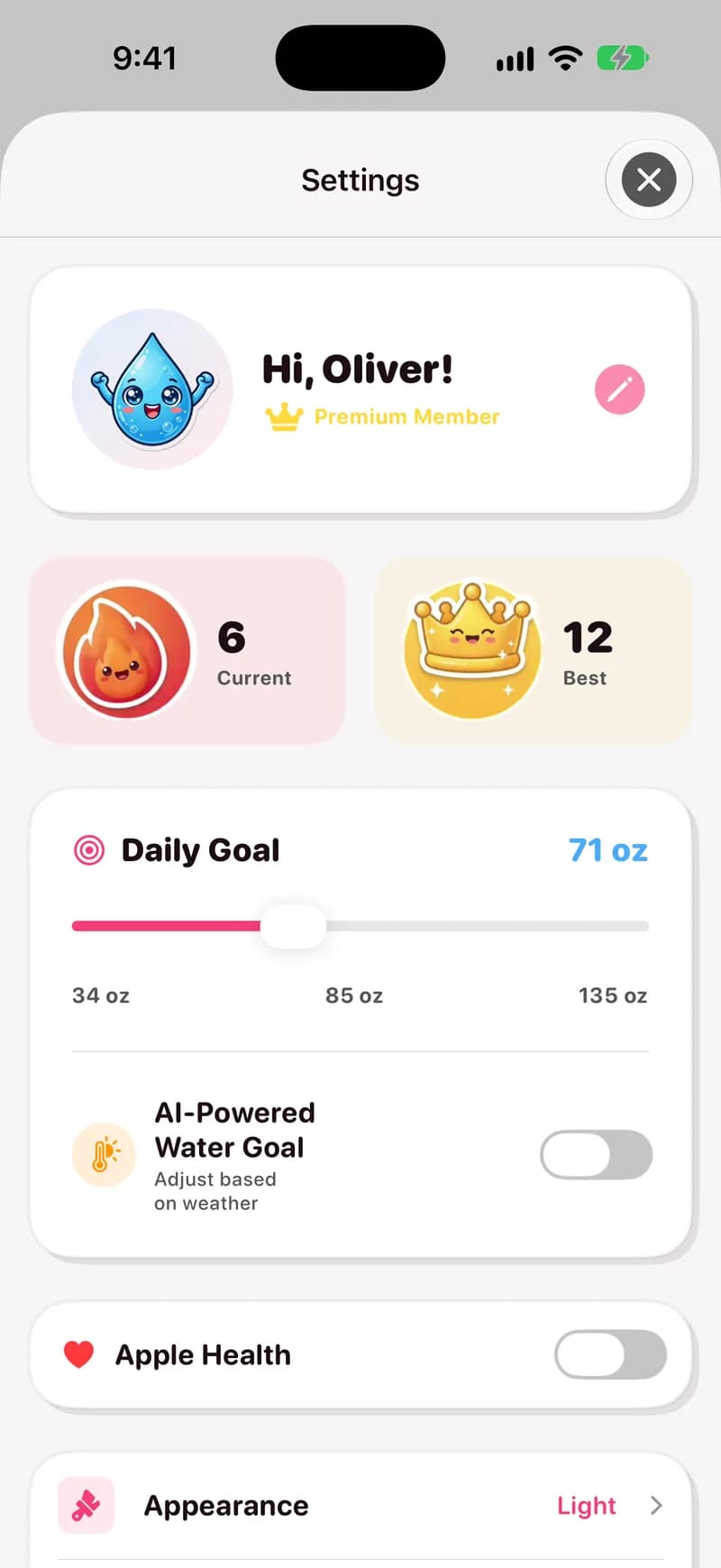
A good start is your normal daily goal. In DropWise you find it under Settings, on the Daily Goal slider. Keep that number in winter. If you are not sure what your normal amount is, our guide on how many liters of water to drink per day helps you find it.
2. Why the cold makes you less thirsty
Thirst is your body's alarm for water. But in the cold, that alarm gets quieter. In a study from 2004, people walked for an hour in cold air at 4 °C (39 °F). They felt up to 40% less thirsty than in warm air, even when their body was already short of water.
The scientists think cold skin pulls blood toward the middle of the body. The body then thinks it has plenty of water and turns the thirst signal down. A US Army research report also tells of people in the far north who were clearly short of water but did not feel thirsty until they came inside and warmed up.
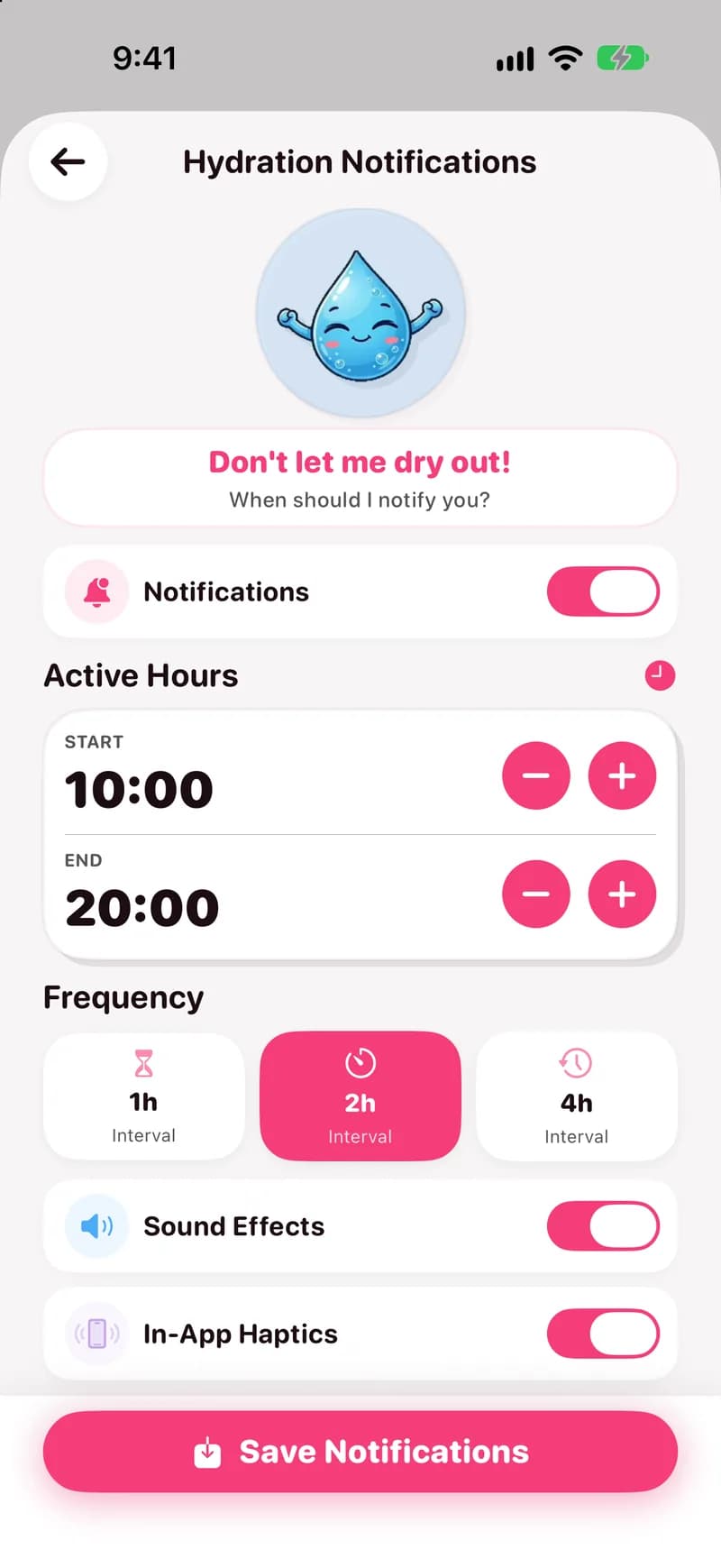
So in winter, do not wait until you feel thirsty. Let reminders do the job of the quiet alarm. In DropWise, open Hydration Notifications, turn on Notifications, choose your Active Hours, for example 08:00 to 20:00, and pick every 1, 2 or 4 hours. Then tap Save Notifications.
3. Where your water goes in the cold
Look at your breath on a cold morning. The little cloud is water leaving your body. Cold, dry air takes more water out of your breath than warm, humid air. The more you move, the faster you breathe and the more water you lose this way.
The cold also makes many people go to the toilet more often. And under a thick coat, a scarf and a warm hat, you can sweat a lot when you walk fast, carry shopping or play in the snow. You just do not see it, because the sweat stays inside your clothes.
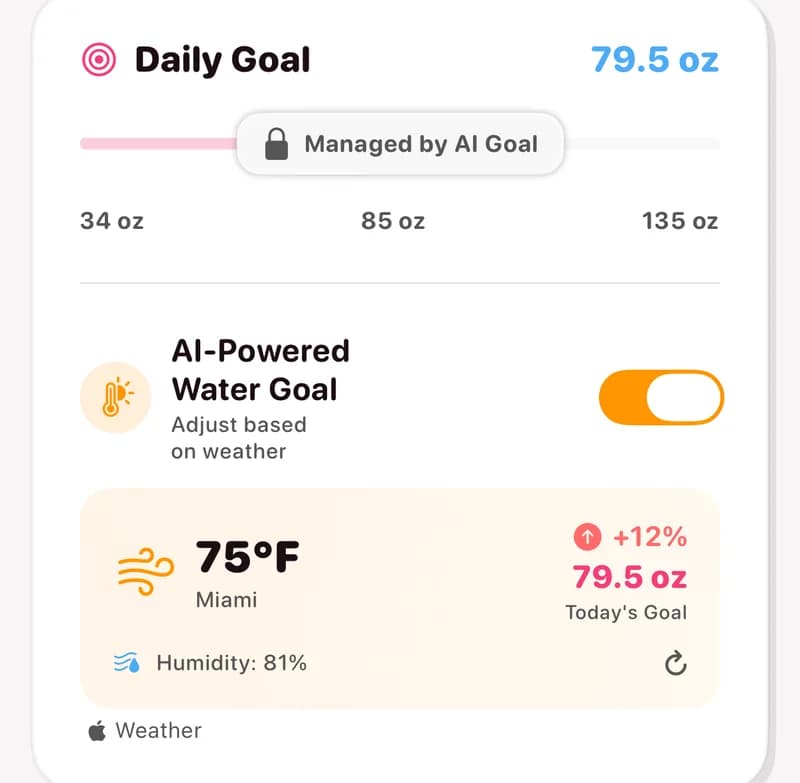
DropWise has an AI-Powered Water Goal that adds water to your goal on warm days. On cold days it never makes your goal smaller than your normal goal, because your body still loses water. The AI-Powered Water Goal is part of DropWise Premium and needs your location to know the weather.
4. Warm drinks count too
Ice cold water is not fun when it is freezing outside. Good news: you do not have to drink it cold. Warm water, herbal tea, green tea, black tea, warm milk and soup all bring water into your body.
Tea has more water and less caffeine than coffee, and herbal tea usually has no caffeine at all. Coffee counts too, but it has more caffeine, so it is good to mix it with other drinks. Fruit like oranges and mandarins, which are easy to find in winter, also contain a lot of water.
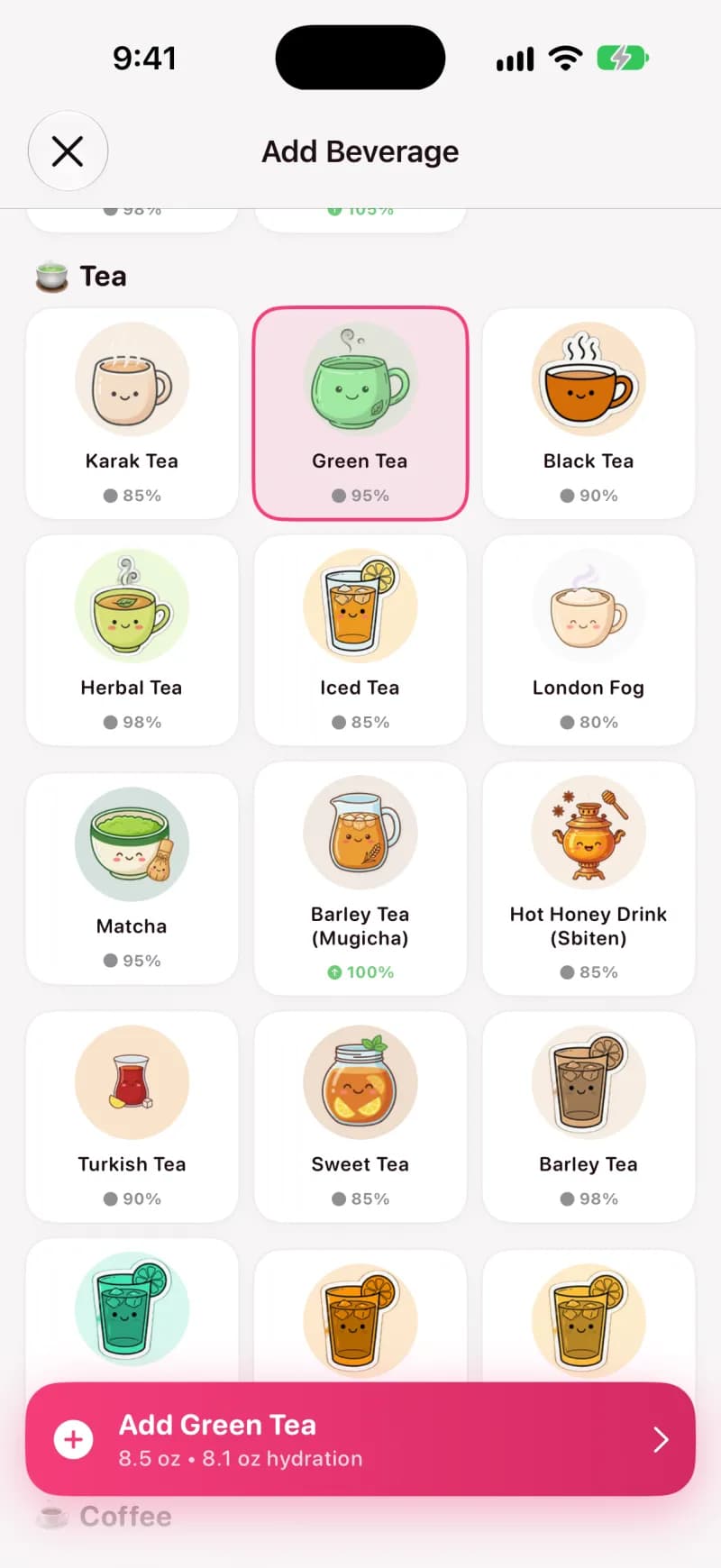
In DropWise, the plus button opens Add Beverage. Each drink tile shows how much of it counts as water. In the Tea group, Black Tea is 90%, Green Tea is 95% and Herbal Tea is 98%. Water is free. Other drinks are part of Premium.
5. Outside in the cold: drink, log and watch your body
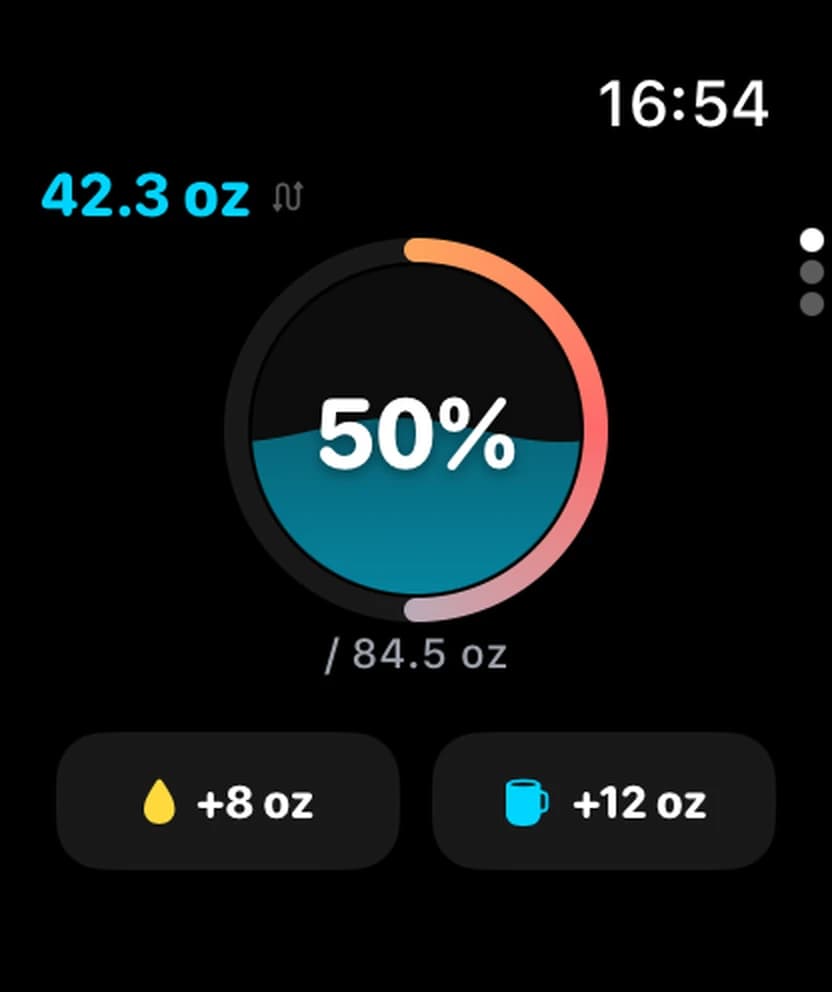
When you go out for a long walk, ski or work outside, take a drink with you. A warm drink in a thermos bottle is nice in the cold. With DropWise on Apple Watch you log it with one tap, so you do not need to take your phone out with cold fingers: 8 oz or 12 oz (200 ml or 350 ml if you use milliliters).
Also watch for signs that your body is getting too cold. The US health agency CDC lists shivering, tiredness, clumsy movements and confusion as early signs of hypothermia, which means a body temperature that is too low. Go inside, take off wet clothes and warm up.
If a person stops shivering, gets blue skin, breathes slowly or passes out, call emergency services right away. The CDC says to give warm drinks only to a person who is awake, and never alcohol.
6. Look back after a cold week
Many people only notice that they drank too little in winter when they look back. So it helps to check your week once in a while.
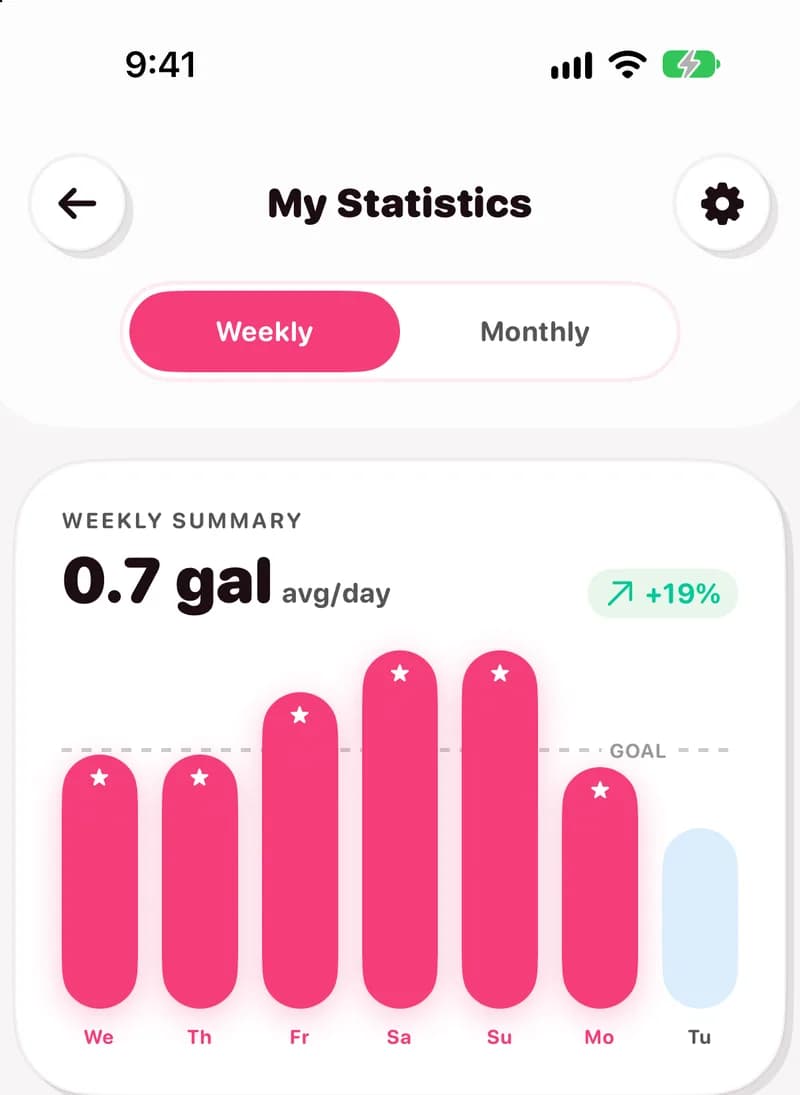
My Statistics in DropWise shows a bar for each day of your week and a line for your goal. Tall bars that reach the line are good days. Short bars show the days you forgot.
Maybe the short bars are the coldest days, when you stayed busy and never felt thirsty. Then you know what to change: more reminders on those days, and a warm mug of tea within reach.
Make a simple plan for a cold day
- 1
Keep your normal goal
Do not lower your Daily Goal in winter. Your body still needs about the same amount.
- 2
Turn on reminders
Choose your active hours and a reminder every 1 or 2 hours in Hydration Notifications, because thirst gets quiet in the cold.
- 3
Pick warm drinks
Warm water, herbal tea, green tea and soup all count. Keep a warm mug or a thermos within reach.
- 4
Take a drink outside
On long walks, ski days or outdoor work, bring a drink and log it with one tap on Apple Watch.
- 5
Watch for cold warning signs
Shivering, tiredness, clumsy movements or confusion mean go inside and warm up. Call for help if someone stops shivering or passes out.
Frequently asked questions
Do you need less water in winter?▼
No. Your body needs water for the same jobs all year. You lose water in the cold through your breath, more trips to the toilet and sweat under warm clothes. Keep your normal daily amount in winter.
Why am I not thirsty in winter?▼
The cold turns your thirst signal down. In a 2004 study, people in cold air at 4 °C (39 °F) felt up to 40% less thirsty than in warm air, even when they were short of water. So drink on a schedule instead of waiting for thirst.
Do tea and other warm drinks count as water?▼
Yes. Warm water, herbal tea, green tea, black tea and soup all bring water into your body. Tea has less caffeine than coffee, and herbal tea usually has none. In DropWise, Herbal Tea counts as 98% water.
Can you get dehydrated in the cold?▼
Yes. Cold, dry air takes water out of your breath, the cold makes many people go to the toilet more, and you can sweat under a thick coat. Because you feel less thirsty, it is easy to drink too little without noticing.
Does DropWise lower my goal when it is cold?▼
No. The AI-Powered Water Goal adds water on warm days, but cold weather never makes your goal smaller than your normal goal. It is part of DropWise Premium and needs your location.
Remember to drink on cold days
Water Reminder DropWise gives you reminders through the day, counts tea and other drinks, lets you log with one tap on Apple Watch and shows a weekly look back. Your water log stays on your iPhone, and in Apple Health if you turn it on.

Sources
How much water do you need?
Enter your weight, exercise and weather for a quick daily estimate.
(155 lb)
Your estimated daily water needs
2.65 L
(89.6 US fl oz)
About 10.5 (250 mL (8.5 fl oz) per glass)
A flexible estimate, not a drinking requirement. Avoid excessive water intake, especially over short periods. Adjust according to thirst, activity, health and medical advice.
Open the full water intake calculator →Related guides

· 9 min read
How Much Water Should You Drink in Hot Weather?
How much water to drink in hot weather: why heat raises your needs, CDC tips for working outside, sports drinks, and the warning signs of heat illness.
· 9 min read
Signs of Dehydration: Early Symptoms and When to Get Help
The early signs of dehydration in adults, from thirst and dark pee to dizziness, the danger signs that need help now, and how to drink enough again.
· 9 min read
Does Coffee Count as Water? What the Science Says
Does coffee count toward your daily water intake? A simple guide to what a real study found, how much caffeine is too much and how to log coffee.
Ready when you are
Download DropWise for iPhone
Track hydration more easily with reminders, Apple Health sync, and a privacy-first flow.
By using DropWise, you agree to our Terms of Use and Privacy Policy.